
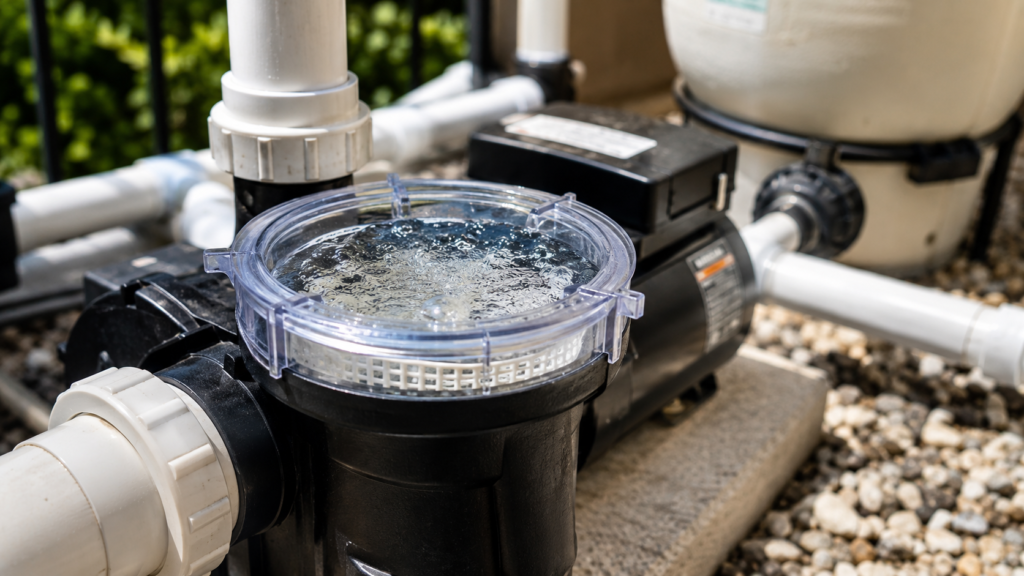
Your pump is running, the motor sounds normal, and nothing is happening. No water moving through the basket, no flow at the return jets, and the pool is about to start going cloudy. Before you call anyone: this is usually a $10 part and 20 minutes of your Saturday, not a $150 service call.
Quick Answer: A pool pump that won’t prime almost always comes down to one of three things — the water level is below the skimmer, there’s an air leak on the suction side, or something is blocking flow into the pump. Check them in that order. Roughly 90% of priming failures are solved before you get to cause #4, and the most common single culprit is a dried-out pump lid O-ring that costs under $15 to replace.
What You Need to Know
- Turn the pump off now if the basket is dry. A pump running without water destroys the shaft seal in a few minutes and can warp the housing — turning a $15 fix into a $400 one.
- Air bubbles in the strainer basket mean a suction-side problem (skimmer to pump). Water dripping out means a pressure-side problem — a different issue entirely.
- Check in priority order. Most people start by disassembling the pump and never check the water level, which is the single most common cause.
- Normal priming takes 30 to 90 seconds. Anything longer means air is still getting in.
- Never use Vaseline or any petroleum product on pump O-rings. It swells and destroys the rubber. Silicone lubricant only.
Pool Pump Priming Diagnosis Chart
Save or screenshot this — match your symptom, then jump to that section.
| What You’re Seeing | Most Likely Cause | Fix Time | Typical Cost |
|---|---|---|---|
| Basket has swirling air bubbles | #2 Suction-side air leak | 15–30 min | $8–20 |
| Basket completely dry, motor running | #1 Low water level | 20 min + fill | $0 |
| Primes, then loses prime in minutes | #2 Air leak or #4 valve setting | 20–40 min | $8–20 |
| Basket full of water, no flow at returns | #5 Clogged impeller or #6 airlock | 20–30 min | $0 |
| Visible leaves/debris in basket | #3 Clogged basket | 5 min | $0 |
| Motor hums, shaft doesn’t turn | #7 Electrical (capacitor) | Call a pro | $25–150 |
| Pot empty every morning | #2 Slow leak or bad check valve | 30 min | $10–40 |
Before You Start: The 60-Second Safety Check
Shut the pump off at the breaker, not just at the timer or switch. You’ll be putting your hands inside the pump housing near the impeller, and a pump on a timer or automation system can start itself while you’re reaching in. This takes ten seconds, and it’s the step most guides skip entirely.
While you’re at the panel, look at whether the breaker is tripped and whether any GFCI outlet near the equipment pad has popped. A tripped GFCI produces confusing symptoms and takes one push to rule out.
Cause #1: The Water Level Is Too Low
Quick Answer: Your pool water needs to sit at least halfway up the skimmer opening. Below that line, the skimmer pulls air straight into the suction line, and the pump can’t build the vacuum it needs. Top off with a garden hose to the midpoint of the skimmer mouth and try again.
This is the most common cause and the least likely to be checked first. Evaporation in a hot week, a big pool party splashing water out, or backwashing the filter without topping up afterward all drop the level enough to break prime.
Also check the skimmer weir door — the hinged flap inside the skimmer throat. It can jam in the closed position from wave action or a burst of air from the filter, and a stuck weir chokes suction exactly like a closed valve. Lift it with your finger; it should swing freely. If it feels stiff, pull it out temporarily and see whether the pump catches.
If you’re topping the pool off more than once a week, you may leak rather than evaporation — which is a different problem worth diagnosing separately.
While you’re working on the suction side, it’s worth knowing that a damaged or missing main drain cover is a genuine entrapment hazard — the CPSC’s pool and spa safety guidance covers the drain cover standards that came out of the Virginia Graeme Baker Act. If your drain cover is loose, cracked, or missing, nobody swims until it’s replaced.
Cause #2: A Suction-Side Air Leak
Quick Answer: Air bubbles swirling in the strainer basket are the signature of a suction-side leak. Start with the pump lid O-ring — it’s the most frequent single cause of air entry and costs under $15 to replace. Then check the union fittings where the suction pipe meets the pump.
Work through these in order:
The pump lid O-ring. Remove the lid and pull the O-ring out of its groove. You’re looking for cracks, flat spots, dried-out sections, or a ring that’s gone hard and lost its squish. Wipe the groove clean, apply a thin coat of silicone-based lubricant, and reseat it. If it’s cracked or permanently flattened, replace it — take the old one to a pool store or match your pump model number online.
The lid itself. Hairline cracks in the clear lid are easy to miss and let air in under vacuum. Hold it up to the light.
The union fittings. Where the suction pipe threads into the pump, hand-tighten firmly. Do not put a wrench on PVC unions — overtightening cracks the fitting and turns a free fix into a plumbing job.
The garden hose test. This is the trick that finds leaks you can’t see. Fill the pump pot, seal the lid, and turn the pump on. While it’s trying to prime, trickle water from a garden hose slowly over each suction-side joint, starting at the pump and working back toward the pool. When the water momentarily seals a leak, the pump will suddenly catch prime or the bubbles will clear — and you’ve found your joint.
Cause #3: A Clogged Pump or Skimmer Basket
The easiest cause to spot and the easiest to fix. Open the pump lid and pull the strainer basket. Leaves, pine needles, acorns, and grass clippings restrict flow enough to stop a prime, especially in autumn.
While the basket is out, check it for cracks. A cracked basket lets debris pass straight through to the impeller, which creates cause #5. If you can see a split, replace it — they’re inexpensive and a cracked one guarantees a repeat problem.
Empty the skimmer basket too. People clean one and forget the other.
Cause #4: A Valve in the Wrong Position
Quick Answer: If your system has diverter valves on the suction side, verify they’re actually open to the pool. A valve nudged during cleaning, closed for winterizing, or left set to a spa drain will stop a prime cold — and there’s nothing wrong with your pump at all.
Check every handle on the suction side and make sure it’s seated firmly in position. On Jandy-style valves with a threaded tab on top, don’t overtighten — the plastic threads strip easily.
Two useful tricks here:
- If you have an attached spa, temporarily switching suction to draw from the spa drain can help the pump catch prime, especially when the equipment pad sits above the pool’s water line. Switch it back once it’s running.
- A badly clogged filter can create enough back pressure to prevent a prime. Set your multiport valve to recirculate and try again. If the pump primes on recirculate but won’t on filter, your filter media is the problem, not the pump — clean the cartridges or backwash the sand.
Cause #5: A Clogged Impeller
Quick Answer: If the strainer pot fills with water but you get little or no flow at the returns, the impeller is likely clogged. Pine needles and long hair are the usual culprits — they wrap around the vanes instead of passing through.
Power off at the breaker. Remove the lid and the strainer basket, then reach into the volute opening and feel the impeller vanes. Rotate it by hand — it should turn freely. Use a piece of stiff bent wire or a small hook to pull debris out from between the vanes. Pine needles pack in tightly and often need several passes.
Once it spins freely and the vanes are clear, reassemble, prime manually, and restart.
Cause #6: An Airlock in the Suction Line
An airlock (or vapor lock) is trapped air sitting at a high point in the plumbing that won’t clear on its own. The tell: water sits in the strainer pot, but flow at the returns is weak or nonexistent, and bubbles keep streaming without ever clearing.
To clear it: set the multiport valve to recirculate, open the air relief valve on top of the filter tank, and let the pump run while the trapped air bleeds off through the relief valve. Give it several minutes.
If air keeps coming after that, you don’t have a simple airlock — you have an active suction-side leak feeding new air into the system. Go back to cause #2 and run the garden hose test again.
Cause #7: The Pump Hums But Doesn’t Turn
Quick Answer: A motor that hums without the shaft spinning is an electrical fault, not a priming problem. The usual cause is a failed start capacitor, sometimes a seized shaft. This is where the DIY line sits — capacitors store a dangerous charge even with the power off.
Signs of a failed capacitor are visible: the cylinder bulges at the top or bottom, leaks oily residue, or shows burn marks. The part itself is $20–40.
I’d stop here and call a technician unless you’re genuinely experienced with line voltage. A capacitor can hold enough charge to injure you well after the breaker is off, and matching the exact microfarad and voltage rating matters. A diagnostic visit runs $100–200 in most US metros — worth it against the alternative.
How to Manually Prime Your Pump (Step by Step)
Once you’ve fixed the cause, prime it properly:
- Turn the pump off and open the air relief valve on top of the filter tank.
- Remove the pump lid and fill the strainer pot with a garden hose.
- Reseat the lid and tighten until the O-ring compresses evenly — hand tight, not gorilla tight.
- Turn the pump on and watch the pot. You should see bubbles clearing steadily.
- Wait 30–90 seconds. A solid column of water with no visible air means you’ve primed.
- Close the filter air relief valve once water sprays from it steadily.
If the pot drains and fills with air again within seconds, there’s still a leak. It can take two or three fill-and-restart cycles when the suction lines have fully drained — but if it never holds, go back to cause #2.
What Does This Cost to Fix?
The honest math, and the reason it’s worth 30 minutes of your time:
| Fix | Part Cost | Pro Service Cost |
|---|---|---|
| Add water / clear basket | $0 | $100–200 call-out |
| Pump lid O-ring | $8–20 | $100–200 |
| Union O-rings | $5–15 | $100–200 |
| Clear impeller | $0 | $100–200 |
| Start capacitor | $20–40 | $150–300 |
| Motor replacement | $250–500 | $500–900 installed |
Costs vary by region and pump model — treat these as planning ranges, not quotes.
How to Stop It Happening Again
- Lubricate the pump lid O-ring with silicone every time you open it — dried O-rings are the single most common cause, and this prevents them.
- Keep the water at skimmer midpoint, especially through heat waves and after backwashing.
- Empty both baskets weekly and more often in autumn.
- Never run the pump dry, even briefly, while troubleshooting.
- Watch the filter pressure gauge. Rising pressure means a dirty filter, which contributes to priming trouble long before it fully blocks.
Priming problems also tend to cascade — a pump that isn’t circulating means water that isn’t filtering, and a day or two later you’re dealing with cloudy pool water on top of the pump issue.
Frequently Asked Questions
Why does my pool pump lose prime overnight?
A slow suction-side air leak lets water drain back out of the pump housing while the system is off, so you find the pot empty each morning. Check the pump lid O-ring first, then the union fittings, then the check valve if your system has one. A hairline crack in a union can drain the pot over several hours without leaving any visible sign during the day.
How long should a pool pump take to prime?
Thirty to ninety seconds from startup, assuming the strainer pot was filled manually. Bubbles should reduce steadily and then stop. If you’re still seeing a steady stream of air after two minutes, you have a leak or an airlock — shut it down rather than letting it run dry.
Can running a pool pump dry damage it?
Yes, and quickly. Without water for cooling and lubrication, the mechanical shaft seal fails within a few minutes and the plastic housing can warp or melt. This is the difference between a $15 O-ring and a $400 pump replacement, which is why the very first step is shutting the pump off if the basket is dry.
Why is my pump humming but not turning on?
That’s electrical rather than hydraulic — most commonly a failed start capacitor, sometimes a shaft seized by corrosion. Check the breaker and any GFCI outlet first, since a tripped GFCI can produce odd symptoms. If power is fine and it still only hums, call a technician; capacitors hold a dangerous charge even after the power is off.
Can I use Vaseline on my pump lid O-ring?
No. Petroleum jelly causes rubber O-rings to swell, soften, and fail, often within a season. Use a silicone-based pool lubricant — a small tube costs a few dollars and lasts years.
Why does my pump prime but there’s no pressure at the returns?
Three usual causes: a clogged impeller, a return-side valve that’s closed or misset, or air still trapped in the system. Check the impeller first, then confirm return valves are fully open, then bleed remaining air through the filter’s relief valve.
What to Do Next
- Pump running again, but the water went hazy while it was down? Here’s how to clear cloudy pool water.
- New to pool equipment entirely? Start with the first-time pool owner guide and its weekly routine.
- Water chemistry drifted while circulation was off? Rebalance it properly with our step-by-step water balancing guide.
