
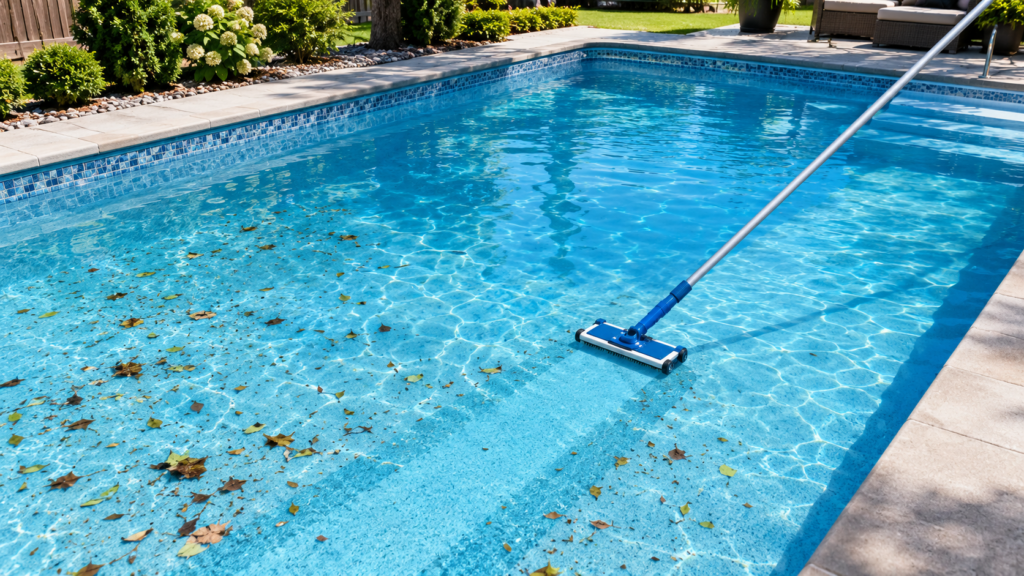
Learning how to vacuum a pool becomes urgent when the floor is covered in leaves and your automatic cleaner isn’t touching it. A manual vacuum fixes that, and the job comes down to three decisions: how to prime the hose, which filter setting to use, and how slowly to move.
Quick Answer: Here is how to vacuum a pool: attach a vacuum head to a telescopic pole, connect the hose, fill it with water, and plug it into the skimmer or vacuum port with the pump running. Set the valve to filter for light debris or waste for heavy debris, then make slow, overlapping passes.
Table of Contents
What You Need to Know
- Knowing how to vacuum a pool starts with one fact: the pump stays on because it creates the suction.
- Filter vs. Waste is the key choice.The pool filter helps maintain clean water by capturing leaves, dirt, and other unwanted debris. Waste sends water and debris out through the waste line.
- Never use Backwash for vacuuming. Backwashing reverses the water flow through the filter, flushing out trapped dirt and debris to keep the filter clean.
- Slow wins. Fast passes stir debris into the water instead of lifting it.
- Cloudy water and lost suction are fixable. The troubleshooting table below covers both.
How Do You Vacuum a Pool?
Manual pool vacuuming uses the pump’s suction to pull debris off the pool floor through a hose. Here is how to vacuum a pool manually: the pump pulls water and debris through the vacuum head and hose, and the filter valve decides where that water goes next.
A manual pool vacuum is a vacuum head, hose, and telescopic pole connected to your skimmer or dedicated vacuum port, used to remove debris that skimmers and robotic cleaners leave behind.
The water path is simple. Water and debris enter the vacuum head, travel up the hose, and pass through the skimmer line to the pump. From there they go through the filter and back to the pool (filter) or out the waste line (waste).
What Do You Need Before You Start?
You need five pieces of equipment, and the vacuum head must match your pool surface.
- Vacuum head: a soft-bristle or brush-style head for vinyl liners, which tear more easily. Wheeled heads suit concrete or gunite.
- Telescopic pole: the same pole you use for brushes and nets works.
- Vacuum hose: long enough to reach the far corner from the skimmer.
- Vacuum plate (skimmer plate): connects the hose to the skimmer on pools without a dedicated vacuum port.
- Garden hose: needed if you vacuum to waste, so you can refill the pool as you go.
What Should You Do Before Vacuuming?
Skim large debris first, empty the baskets, and confirm the water level. Before you learn how to vacuum a pool step by step, remember that large leaves clog the hose and the pump basket quickly.
- Use a pool skimmer net to remove leaves, insects, and other debris floating on the water’s surface.
- Regularly clean out both the skimmer basket and pump strainer basket to prevent debris from restricting water circulation.
- Check that the water level sits near the middle of the skimmer opening, so the skimmer doesn’t suck air.
- Run the pump so water is circulating.
What Filter Mode Is Best for Vacuuming Your Pool?
Use Filter for light debris and Waste for heavy debris, but only if your filter has a waste setting. The filter setting is the part of how to vacuum a pool that most owners get wrong. On a multiport valve, waste bypasses the filter and sends water out through the waste line. The filter pushes water through the filter media and returns it to the pool.
| Filter type | Light debris | Heavy debris or dead algae | Notes |
|---|---|---|---|
| Sand | Filter | Waste | Check the pressure gauge afterward and backwash if it reads well above its clean value |
| Cartridge | Filter | No waste setting on most models | Remove heavy debris first, then clean the cartridge after |
| DE (diatomaceous earth) | Filter | Waste, with caution | Guidance varies by manufacturer, so check your manual |
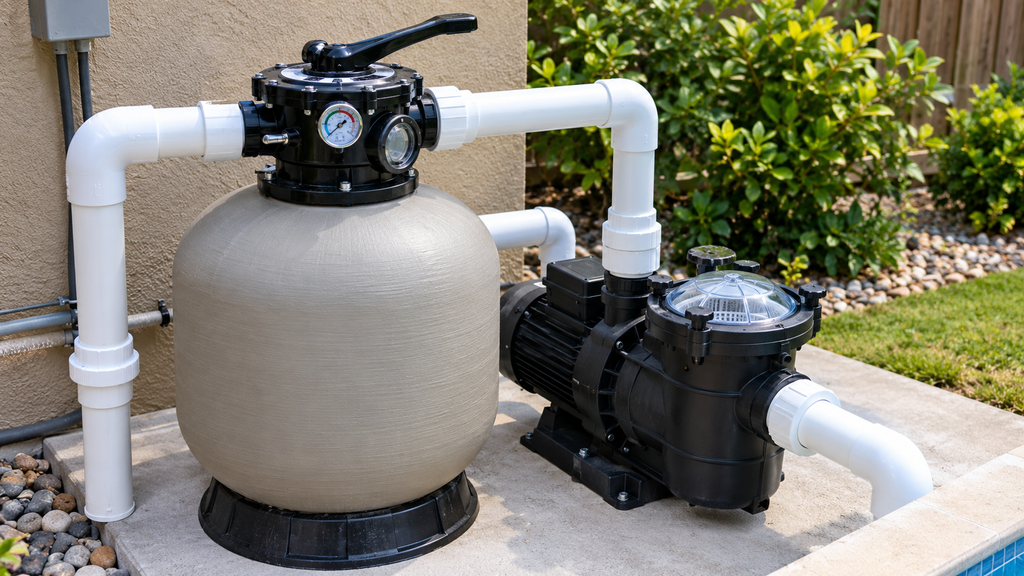
Save or screenshot this Filter Setting Table. It covers which valve position to choose before you start vacuuming.
Hayward’s own multiport valve guide says to turn the pump off before changing the valve position, and describes the Waste position as the one for vacuuming directly to waste.
Want this table, the eight steps, and the troubleshooting guide on one printable page? Join the Pool Owner Guide email list for the Pool Vacuum Cheat Sheet.
Do You Vacuum a Pool on Backwash or Waste?
Use Waste, never Backwash. Backwash reverses water through the filter to flush it out, which is the opposite of what vacuuming needs. Waste is the setting that skips the filter and sends dirty water out the waste line.
Why Waste Isn’t Always the Right Choice
Waste lowers your water level, because every gallon that leaves through the waste line is gone. Local rules can also limit where pool water may be discharged. Check your local water or environmental authority before sending large volumes to a drain or yard.
How to Vacuum a Pool Step by Step
Vacuuming takes eight steps: assemble, set the valve, prime, connect, vacuum, handle problem areas, monitor, and finish. Each step below has one action and a short explanation.
1. Assemble the vacuum head, pole, and hose
Snap the vacuum head onto the pole. Connect the hose to the head, usually at the swivel-cuff end.
2. Turn the pump off, set the filter valve, and turn it back on
Turn the pump off before moving a multiport valve, since turning it under pressure can damage it. Set it to Filter or Waste using the table above, then restart the pump.
3. Prime the hose until no air remains
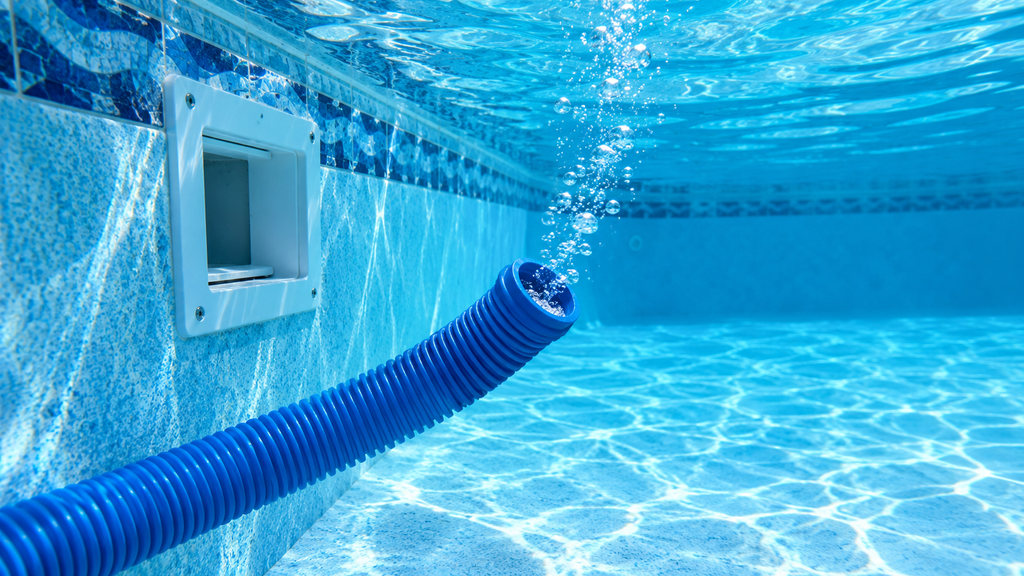
Submerge the hose and feed it into the water hand over hand until no more bubbles come out. Another method is to hold the open end against a return jet until the bubbles stop. An air-filled hose can make the pump lose its prime.
4. Connect the hose to the skimmer or vacuum port
Keep the open end underwater and push it into the skimmer suction hole. If you use a vacuum plate, follow its instructions on whether the basket stays in. Without a plate, remove the basket.
5. Vacuum in slow, overlapping passes
Start in the shallow end and work toward the deep end. Overlap each pass slightly, like mowing a lawn. Move slowly enough that the water above the head stays clear.
6. Handle corners, steps, and shallow areas
Angle the head into corners. On top steps and shallow areas, the head can suck air and break suction. Brush that debris toward deeper water, then vacuum it there.
7. Check the pump basket and refill if you’re on Waste
Stop every few passes to empty the pump basket if the pool is dirty. On Waste, keep a garden hose running into the pool so the level doesn’t drop below the skimmer.
8. Finish, reset, and test
Turn the pump off, disconnect the hose, and set the valve back to Filter. Empty the baskets and check the filter pressure gauge. Test your water afterward, because debris removal can shift chemistry. Start with how to balance pool water.
Do You Turn the Pump Off When Vacuuming a Pool?
No, keep the pump running the entire time you vacuum. Knowing how to vacuum a pool correctly means knowing the pump never goes off during the job. The pump creates the suction that pulls debris through the hose.
Turn it off only to change the valve in step 2 and when you finish. If you’re unsure how long the pump should run each day, see how long to run a pool pump.
Where Does the Dirt Go When You Vacuum a Pool?
Dirt goes to the pump basket, the filter, or the waste line, depending on your valve setting. Large debris lands in the pump strainer basket. Fine particles go through the filter on Filter, or out the waste line on Waste.
The counterintuitive part is that vacuuming on Filter can release fine dust back into the water, because the smallest particles can pass through the filter. That is why heavy debris and dead algae are best vacuumed to Waste when your system allows it.
Troubleshooting: Why Is My Pool Vacuum Not Working?
Most problems with how to vacuum a pool come from air in the system, a full basket, or moving too fast. Check this table in order.
| Symptom | Likely cause | Fix |
|---|---|---|
| Weak or no suction | Air in the hose, or a full basket | Reprime the hose, then empty the skimmer and pump baskets |
| Pump basket not full of water, bubbles at the returns | Lost prime or an air leak | Follow the pump not priming guide |
| Water turns cloudy | Debris stirred up, or fine particles passing the filter | Stop, let it settle for a couple of hours, and run the filter. See cloudy pool water |
| Dirt keeps coming back | Filter can’t keep up with the load | Switch to Waste if your filter has it |
| Water level dropping | You’re on Waste | Run a garden hose into the pool |
| Head sucks air on steps | Water too shallow | Brush debris to deeper water first |
How Do You Vacuum a Green or Algae Pool?
Vacuum a pool with algae on Waste, after killing the algae, so the dead material leaves instead of recirculating. The method for how to vacuum a pool with algae changes, because vacuuming alone rarely removes all of it. Algae clings to corners and surfaces, so vacuuming helps most when you remove the dead material afterward. The full process is in fixing a green pool in 24 hours.
Manual Vacuum vs. Robotic Cleaner: Which Should You Use?
A robotic cleaner suits routine upkeep, while a manual vacuum suits heavy debris and a fast, thorough clean. Choosing how to vacuum a pool depends on the mess: robots can push piles of wet leaves around rather than lifting them, so heavy debris calls for a manual vacuum.
| Manual vacuum | Robotic cleaner | |
|---|---|---|
| Best for | Heavy debris, algae aftermath, spot cleaning | Weekly upkeep |
| Effort | You do the work | Hands-free |
| Control | Full | Automated pattern |
How Often Should You Vacuum a Pool?
Vacuum weekly, and again after storms or heavy debris. Pool maintenance guides commonly recommend a weekly schedule. A pool under trees, or one hit by a storm, may need it sooner.
When Should You Call a Pool Professional?
Call a professional when suction won’t hold after repriming, algae keeps returning, or equipment looks damaged. Persistent suction loss often points to an air leak in the pump or plumbing. If you can’t find the cause, a technician can pressure-test the system.
The CDC’s pool operation guidance advises maintaining filtration and recirculation systems according to manufacturer recommendations, which is why your filter manual is the final word on valve settings.
How to Vacuum a Pool: FAQ
What setting do you put your pool filter on when vacuuming?
Use Filter for light debris and Waste for heavy debris, if your filter has a waste setting. Filter returns water to the pool after cleaning it. Waste skips the filter and sends the water out. Cartridge filters typically have no waste setting, so check your manual.
Do you vacuum a pool on backwash or waste?
Use Waste when you need to bypass the filter. Never use Backwash for vacuuming. Backwash reverses the water flow through the filter to flush it clean, which is a separate maintenance task. Using it while vacuuming does not clean the pool floor and can push debris the wrong way.
Do you turn the pump off when vacuuming a pool?
No, leave the pump running. The pump creates the suction that pulls debris through the hose. Turn it off only when changing the multiport valve position at the start and when you finish. Vacuuming with the pump off does nothing, because there is no suction.
Where does the dirt go when vacuuming a pool?
Large debris lands in the pump strainer basket. Fine particles go through the filter if you use the Filter setting, or out the waste line if you use Waste. That is why you empty the pump basket during heavy jobs and check the filter pressure gauge when you finish.
Should the skimmer basket stay in when you vacuum?
It depends on your setup. If you use a vacuum plate, follow its instructions, since many sit with the basket in place. If you plug the hose straight into the skimmer suction hole, remove the basket so it doesn’t block the opening. When in doubt, check the plate’s instructions.
How often should you vacuum your pool?
Vacuum once a week as a baseline. Add extra sessions after storms, heavy leaf fall, or any time you notice debris on the floor. Pool maintenance guides commonly recommend a weekly routine because debris left in the water can feed algae growth and strain your water balance.
Can you vacuum a pool with a cartridge filter?
Yes, but most cartridge filters have no waste setting, so everything passes through the cartridge. Remove heavy debris with a net first, vacuum on Filter, and clean the cartridge afterward. If you need a waste option for a heavy job, ask a pool professional about your system.
Can vacuuming remove algae?
Vacuuming helps, but it usually can’t remove all the algae alone. It removes dead algae and debris that feed regrowth. Treat the algae first, then vacuum to Waste if possible. For the full process, see fixing a green pool.
What to Do Next
Now that you know how to vacuum a pool, finish the job properly:
- Test your water. Vacuuming can shift chemistry. Start with how to balance pool water.
- Fix cloudy water. If the pool clouded up afterward, follow the steps in cloudy pool water.
- Clean your filter. [CONTENT GAP: how to backwash a sand filter / clean a cartridge filter]
- Pick a cleaner. [CONTENT GAP: manual vs. robotic cleaner buying guide, commercial page not yet built]
